Follow me!
Gender Mystique

My fangirl moment: Hidden Brain!

10/11/2017

1 Comment

 
I know, I know. I have complained about repetitive interview questions, but the truth is that is order for people to open their minds and let go of gender stereotypes, those of us who do this work must answer those questions over and over. Besides, every once in a while, we get one of those really fun interviews with someone we can share a laugh with, along with the information.


Last May, I had one of those interviews, with Shankar Vedantam of NPR’s Hidden Brain. We met at my local mall and strolled around the kids department in Macy’s, chatting about pink and blue, pockets/no pockets, and the missing character on the boys’ Star Wars T-shirts. (Can you guess who it was?) It was a double blast because inside I was fangirling like a twelve-year old. Hidden Brain is one of my favorite podcasts: smart, well-paced, and slickly produced like an audio documentary. And Shankar Vedantam is a great interviewer and host; being on his Rolodex was a dream come true.


So enjoy the podcast episode. Bonus: now I know how Lise Eliot (Pink Brain, Blue Brain) pronounces her name.
1 Comment

Why pinkification matters

3/31/2014

 
There's been quite of bit of back-and-forth about pink lately, Researcher Rebecca Hains summarizes it very neatly:

“What’s the problem with pink, anyway?” griped Yael Kohen in New York. Then, building upon Kohen’s piece, Slate senior editor Allison Benedikt demanded: ”What is it with you moms of girls? I have never met a single one of you who isn’t tortured about pink and princesses.”


Over at Pigtail Palls, Melissa Wardy lays out the counterargument:

There is a difference between being anti-pink and being anti-limitation, and as someone who educates thousands of parents every week on this issue I feel most parents fall into the second camp. We are not anti-pink. We are anti-limitation.


Anyone who studies -- and critiques -- gender distinctions can expect to be accused of one of two things:

  1. trying to disrupt the "natural" order of things, by which is meant binary, biology-is-destiny ideology. (Men and women are opposites or complements, there are only those two categories, and the corresponding cultural coding of masculinity and femininity is the natural outcome of these binary biological differences.)
  2. making a mountain out of a molehill


Countering the first assertion is a matter of evidence, both scientific and cultural. Biological sex is not either-or. There are as many variations on gender codes as there are cultures in human history. Of course, like other modern controversies, from climate change to vaccination, evidence can not sway the committed unbeliever. My research is aimed at the persuadable reader, and at the embattled advocates for gender equality and acceptance who need the ammunition. 

The second accusation is more problematic. People who espouse this view often claim to embrace a more inclusive and accepting view of gender variations. They want their boys to be free to be artists and their girls to be engineers. But gosh-darn-it all this fuss about pink is so TRIVIAL! 

Here is where I will take the liberty of substituting "pinkification" for "pink", because it isn't about the color pink itself, but about the cultural pattern of offering children a strongly stereotypical version of gender. Pinkification is what I will call this pattern. Here's why it isn't trivial:

  • The pinkification of culture has a history, and it is recent. 
  • Pinkification is not just the use of pink to denote "girls' things", but the narrowing of choices to exclude neutral options, which reinforces the fore-mentioned (incorrect) binary 
  • Pinkification works because it targets children at a developmentally vulnerable stage.
  • Pinkification teaches children stereotypes that limit the way they perceive themselves and others. 
  • Pinkification excludes and stigmatizes children who do not identify with gender stereotypes.


When did pink become a girl color?

8/14/2013

 
For the first time since I started this blog, I'm going to recycle an old post. I wrote "Pink and Blue" because I got tired of answering the same question over and over and over. Apparently, just writing a book doesn't effect an immediate mind meld between author and reader. Who knew?

I do hope more people do read the book; more and more libraries have it, and as academic tomes go, it's pretty cheap. It's not just about pink and blue. That's just one chapter. Want to know when pink became girly? Here's the short version, originally posted 1/3/2012.


Read More

Blue is NOT a spokescolor; pink is a spokescolor. 

3/21/2013

 
Here's a great post from Kyle Wiley of The Good Men Project (re-blogged via the Huffington Post, but hey, Arianna's rich enough). My favorite line:
It’s not just “a” girl color, but the international spokescolor (yes, a made up word) for the female gender.
Made up words are the best, because like all custom-made items, they fit better than the off-the-rack-versions. That is exactly the idea I have been trying to get across, less articulately, when I talk or write about pink and blue. Blue is NOT a spokescolor; pink is a spokescolor. Why is that, do you think? Is there something magical about pink itself? Mais non.

The magic is one of the oldest known superpowers: giving birth. Stay with me, friends. Here's how I see it: Women used to be powerful because they gave birth. The only way men could be more powerful than women was to control reproduction -- through marriage, through rape, through laws about birth control and abortion. But none of that transfered the magical power from women to men, so a cultural solution emerged instead. Make birth dirty, make sex a sin, make women dirty, weak sinners, lower than men because of their magic power.

Now all you have to do to maintain male superiority is make sure they are not tainted by anything remotely effete or feminine. Punish homosexuality. Raise little boys to be not-girls. Ridicule boys --and men-- who cry, or who are unathletic, or who like pink. It's a small price to pay for a place at the top of the social order.

Why have women put up with this? Many reasons, including a need to protect their offspring, their own survival and this complicated force called "hegemony", which results in acceptance of the dominant culture even when it works against you. (Kind of a cultural Stockholm syndrome.) But all is not lost; there are men and women, mothers and fathers, who believe that all humans have magical powers of love, imagination and creativity, and that humanity will benefit when every baby is valued for its potential to love, imagine and create, not its role in human reproduction.

Peace. (Steps off soapbox, returns to her index cards.)

No pink for you, Michael!

2/21/2013

 
Picture
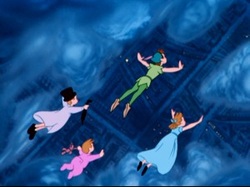
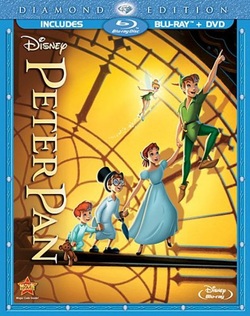
One of the examples I use to show how pink used to be an acceptable color for boys is Walt Disney's 1953 animated film, Peter Pan. The youngest child, Michael, wears pink pajamas throughout the entire movie. (Don't take my word for it: just search for images for "Disney Peter Pan Michael")

Picture
Disney is re-leasing a special DVD version this year, and I've caught a few of their TV ads. It sure looks like Michael's pj's have been re-colored. All I have been able to find online is the cover art (on the left). Has anyone seen the new version?

Please don't tell me they got rid of the pink pajamas and left in "What made the Red Man red".

ETA: I suppose I should be grateful they didn't change Wendy's dress to pink.

"Pink and Blue" makes an appearance on CBS Sunday Morning

12/31/2012

 
I can't decide which was more fun: doing the interview or seeing the "Fast Draw" segment created by Mitch Butler and Josh Landis. My only regret: not smiling more. (I am really not that serious!)

What happened in the 1970s?

5/23/2012

 
I am finally emerging from the end-of-semester editing and grading marathon -- over thirty 25-page papers to read, at the draft and final stages -- and back in research mode for the summer. Bliss! Much as I love teaching, too much time away from writing makes me feel frantic and fragmented.

The proposal is still awaiting approval, but the work continues. One of the most frequent questions I get about "Pink and Blue" is about my claim that pink did not acquire its current symbolism until the 1970s. (A bit of explanation: by "current symbolism", I mean not only its meaning, but how powerfully it maintains that meaning regardless of context.) I have been accused of "blaming" feminists for the pinkification of girl culture, because I argue that it was feminist critiques of pink color-coding that helped solidify its symbolic meaning. 

Now the more I delve into the fashions of the 1970s for my new book, the more I get the sense that something happened in the mid 1970s that super-charged pink as a feminine signifier. Here's today's clue, from the Online Etymology Dictionary:

Amer.Eng. Pink collar in reference to jobs generally held by women first attested 1977.

Pink, Pretty and Princess: It is not Nature it's Corporate Nurture

4/6/2012

 
An excellent analysis of the marketing of princess culture, beauty and sexualization since the 1980s.

http://www.prlog.org/11842269-pink-pretty-and-princess-it-is-not-nature-its-corporate-nurture.html

Children's clothing, 1922. Drawing the lines between babies, boys and girls.

2/13/2012

 
Yesterday, February 12, would have been my mother's 90th birthday. In her memory, I decided take a close look at children's fashion in the year of her birth. As the third child born to a young German Lutheran minister and his wife in rural Canada, I doubt if she ever wore any of the fancier styles shown here, but family photos certainly confirm the rules of appropriate clothing for children under 7. 

Babies from birth to around 6 months: long white gowns, ranging from minimally embellished to elaborately trimmed with lace and embroidery.

Babies from six months to a year or slightly older: short white dresses and one-piece rompers. Again, these could be plain or fancy, depending on the occasion and the family's budget and needlework talents.

Gender differences were introduced between one and two years, with little boys exchanging dresses for short trousers, often attached to their shirts or blouses with buttons at the waistline. Little girls stayed in dresses, but in an array of colors. 

Here's a video I created for the occasion:

Is "pink" a stage?

1/27/2012

 
One of the hardest things about writing a book is setting its limits. Pink and Blue is about baby and toddler clothing, not because the rest of the fashion landscape is ungendered, but because the first five or six years of life are especially significant in learning culture. I tried to stay within my own disciplinary territory -- history, not psychology. (Though I do use current psychological theories to try to understand and explain how children might respond to  clothing trends and patterns.

This resulted in the omission of one really interesting aspect of gender performance in children: the rejection of pink, girlie style by so many girls when they enter middle childhood. Blogger Suzette Waters posted about this earlier this week, observing that her 9-year-old daughter is "leaving pink behind", and trading it for blue, purple and even black. As I understand the child development literature, this is a clear sign that Anna has mastered the concept of "gender permanence" and no longer needs to adhere to stereotyped clothing and toys in order to ensure a stable gender identity. Suzette ponders the future trajectory of Anna's tastes, anticipating possible conflicts over body piercing.

This complicates the symbolism of pink and the gender markers of early childhood, at least as seen through the eyes of a nine-year-old. Besides being "feminine", pink takes on the a additional connotation of "babyish", which many girls reject as they enter middle childhood and adolescence. It also raises the interesting question of what age-appropriate "feminine" choices are available for girls 7-14. From what I hear from parents of that age group, it's a challenge!
<<Previous

    Jo Paoletti

    Professor Emerita
    ​American Studies
    University of Maryland

    Picture
    Picture

    Archives

    January 2023
    February 2022
    May 2021
    June 2020
    February 2020
    August 2019
    July 2019
    June 2019
    April 2019
    March 2019
    December 2018
    November 2018
    October 2018
    August 2018
    July 2018
    February 2018
    October 2017
    September 2017
    August 2017
    June 2017
    March 2017
    February 2017
    November 2016
    October 2016
    September 2016
    August 2016
    June 2016
    March 2016
    January 2016
    December 2015
    November 2015
    August 2015
    May 2015
    April 2015
    March 2015
    November 2014
    October 2014
    September 2014
    July 2014
    June 2014
    April 2014
    March 2014
    February 2014
    January 2014
    August 2013
    July 2013
    June 2013
    May 2013
    March 2013
    February 2013
    January 2013
    December 2012
    September 2012
    August 2012
    June 2012
    May 2012
    April 2012
    March 2012
    February 2012
    January 2012
    December 2011
    November 2011
    October 2011
    September 2011
    June 2011
    April 2011
    March 2011
    February 2011
    September 2010
    August 2010
    July 2010

    Categories

    All
    1920s
    1950s
    1960s
    1970s
    1980s
    Aging
    Ask Jo
    Baby Cards
    Baby Clothes
    Baby Dresses
    Beyond The Us
    Book 1
    Book 2
    Book 3
    Boys
    Button On Suit
    Button-on Suit
    Child Consumers
    Children And Consumers
    Children As Consumers
    Color Symbolism
    Creepers
    Culture Wars
    Design Details
    Dress Codes
    Dress Up Play
    Dress-up Play
    Ethnicity
    Fashion And Age
    Feminism
    Garment Details
    Gender Binary
    Girls
    Hair
    Layettes
    Men
    Middle Childhood
    Neutral
    Pants For Girls
    Pink
    Pink For Boys
    Prenatal Testing
    Princesses
    Que Sera Sera
    Rants
    Research
    Rompers
    Sexuality
    Stereotypes
    Teens
    Toddlers
    Tomboys
    Transgender
    Unisex
    Unisex. 1970s
    Women
    Writing Updates

Powered by Create your own unique website with customizable templates.
